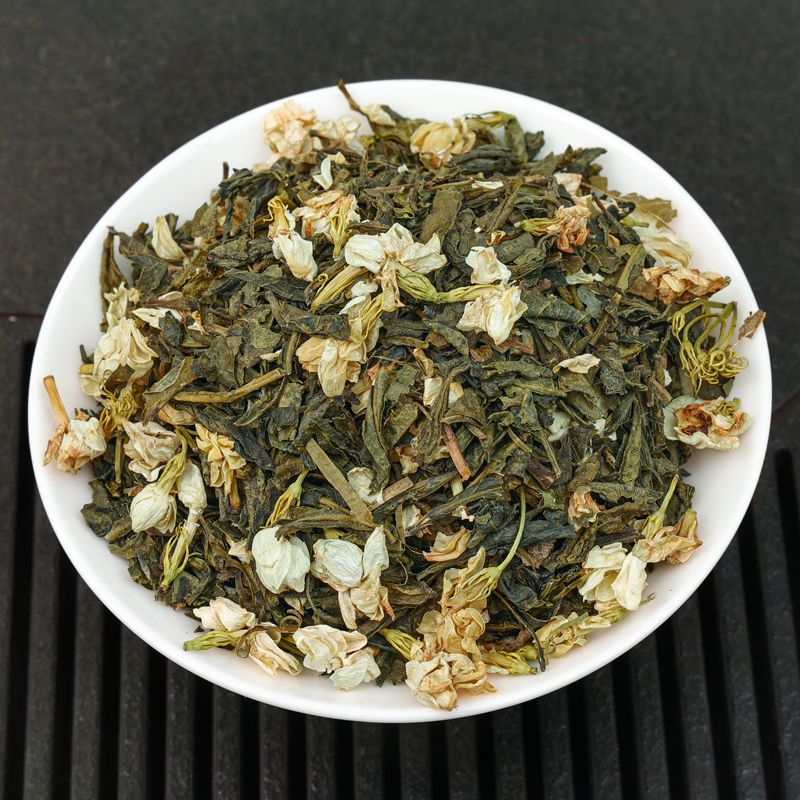
In the vast ocean of Chinese tea, there is one variety that does not win through the aloofness of alpine mists, but instead conquers the world with an exquisite, absolute tenderness. It perfectly blends the body of tea with the soul of flowers, a harmony praised by ancients as “Scented with jasmine to achieve the supreme flavor, ranked as the number one fragrance under heaven.” This is Jasmine Tea. As the definitive representative of Chinese flower teas, Jasmine Tea not only embodies the pinnacle of traditional Eastern artisanal skill but also remains the most familiar, comforting aroma etched into the cultural memory of the Chinese people.
1. Origin: A Romantic Encounter on the Silk Road
The birth of Jasmine Tea is a cross-cultural “love affair” spanning thousands of miles, bridging ancient tea culture with an exotic botanical newcomer.
The jasmine flower itself is not native to China; it originated in the regions of ancient Rome, Persia, and India. During the Han Dynasty, with the opening of the overland and maritime “Silk Roads,” jasmine was introduced to China as an ornamental flower, entering through regions such as Fuzhou in Fujian Province.
While the Chinese historically had habits of flavoring tea with additives like cornelian cherries, scallions, and ginger, the true integration of fresh flowers with tea leaves—leveraging the natural ability of tea to absorb ambient aromas—began in the Tang and Song Dynasties and matured during the Ming and Qing Dynasties. Tea masters discovered that the brisk, clean profile of green tea matched perfectly with the rich, heady sweetness of jasmine. After countless experiments, the prototype of modern jasmine tea emerged in the Ming Dynasty. The precise craft of layering tea leaves with fresh blossoms to let the tea absorb the floral essence is known in Chinese tea science as “Xun Zhi” (the scenting process).
2. Historical Evolution: From Imperial Favor to the “People’s Tea”
The historical trajectory of Jasmine Tea charts its glorious journey from the exclusive corridors of the imperial palace to the tables of ordinary citizens, and ultimately out to the wider world
(1).Commercialization and the Zenith during the Ming and Qing Dynasties:
As the commodity economy boomed during the Qing Dynasty, Fuzhou—blessed with ideal geographic advantages—became the undisputed global center for jasmine tea production. Empress Dowager Cixi harbored a profound affection for jasmine tea, designating it as an imperial tribute and frequently presenting it as a diplomatic gift to foreign envoys. During this era, Fuzhou jasmine tea was exported across Europe and the Americas via the Maritime Silk Road, captivating the Western world.
(2).The Mid-20th Century “National Tea”:
With the opening of major railways like the Jinpu Line in the early-to-mid 20th century, jasmine tea moved northward on a massive scale, deeply integrating into the culinary culture of Northern China (particularly Beijing, Tianjin, and Shandong). The term Xiang Pian (fragrant petals), used frequently by old Beijingers, refers specifically to jasmine tea. It became the most accessible, widely circulated “national drink” of that era.
(3).Multi-Region Development and “Intangible Heritage” (21st Century–Present):
Today, jasmine tea production has evolved into a collaborative landscape featuring multiple specialized regions: Fuzhou, Fujian (the cradle of traditional craftsmanship), Hengzhou, Guangxi (the world’s largest jasmine cultivation base), along with Qianwei in Sichuan and Yuanjiang in Yunnan. Furthermore, the traditional processing craft of Fuzhou Jasmine Tea has been officially inscribed on the UNESCO Representative List of the Intangible Cultural Heritage of Humanity, marking its modern revival.
3. Ideal Terroir: The Flawless Beauty Born of Water and Land
Crafting a premium cup of jasmine tea demands rigorous, almost harsh environmental conditions for both the base tea and the fresh blossoms. Taking Fuzhou and Hengzhou as prime examples, their unique terroir yields the finest jasmine in the world.
(1). Climate: Intense Heat, High Humidity, and Abundant Sunshine
Jasmine is a thermophilic plant that thrives on intense heat; a popular Chinese folk saying notes that “jasmine cannot be killed by the sun.” Production zones are invariably situated in low-latitude, subtropical monsoon climate zones characterized by long summers, intense solar radiation, and plentiful rainfall. Only on clear summer days where temperatures soar above 30°C can the essential oils and aromatic compounds within the jasmine buds reach their peak secretion.
(2). Terrain and Soil: Alluvial Plains and Micro-Acidic Sandy Loam
The highest quality jasmine flowers are harvested from alluvial plains or basins located at the confluence of rivers. The soil here consists of deep, river-deposited sandy loam that offers superb aeration and drainage while remaining micro-acidic. This specific soil composition produces jasmine plants with large buds, high yields, and thick petals. Crucially, the resulting aroma is flawlessly pure and devoid of muddy notes, making it the perfect raw material for the scenting process.
4. Health Benefits: The Healing Aesthetics of Purity
Jasmine tea delivers a double therapeutic punch, retaining the rich polyphenols of its green (or white) tea base while incorporating the pharmacological activity of jasmine essential oils. At the intersection of traditional Chinese medicine and modern science, it offers distinct wellness values:
(1).Soothing the Liver, Dispelling Stagnation, and Calming the Mind:
In a fast-paced modern world, individuals frequently battle anxiety and stress. Jasmine tea is rich in volatile essential oils such as jasmone and linalool. When processed through the olfactory and gustatory pathways, these compounds gently soothe the nervous system, noticeably lower the heart rate, and offer exceptional efficacy in easing psychological pressure, relieving emotional tension, and “soothing the liver” (as termed in Eastern medicine).
(2).Antioxidants and Skin Rejuvenation:
Premium jasmine tea typically uses high-grade, early-spring green or white tea as its base. This base preserves a vast reservoir of catechins, tea polyphenols, and Vitamin C, which serve as potent natural free-radical scavengers. When combined with the natural clarifying properties of jasmine, long-term consumption helps inhibit melanin formation and slows skin aging.
(3).Regulating Qi, Relieving Pain, and Freshening Breath:
In traditional Chinese medicine, the jasmine flower is a medicinal herb known for strengthening the spleen, resolving dampness, and regulating Qi to alleviate pain. Furthermore, the natural fluorine and volatile aromatic compounds in jasmine tea effectively inhibit the proliferation of oral bacteria. This not only neutralizes halitosis caused by food residues but also reinforces dental health, acting as a natural oral refresher.
If Yingde Black Tea resembles the fiery, passionate sun, and Phoenix Dancong is an aloof, brilliant hermit, then Jasmine Tea is a gentle, deeply intuitive woman from a picturesque water town. It is a product born of “ice and fire”—the tea base is harvested in the crisp chill of early spring, only to wait patiently through the entire seasons until the hottest midsummer nights, when the jasmine blossoms open to embrace the leaves and surrender its entire fragrant soul. To drink a cup of jasmine tea is to witness a profound art of patience and fusion—the ultimate, most tender gift that Chinese tea masters have bestowed upon the world through the medium of flowers.
-300x300.jpg)