.jpg)
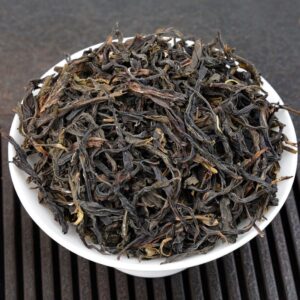
In the global landscape of black tea, alongside world-renowned varieties like Qimen (Keemun) and Darjeeling, shines a brilliant “Oriental Pearl”—Yingde Black Tea. Celebrated for its unique profile of being “rich, strong, fresh, and brisk,” it was once a flagship product of China’s export economy, finding its way to the West and even becoming a royal beverage selected by the British Royal Family to entertain VIP guests. What stories and secrets of terroir lie behind this mellow, sweet, and deep crimson Chinese tea?
1. Origin: A Crimson Legend Bred by Modern Agrotech
Unlike traditional Chinese teas that boast hundreds or thousands of years of history, the birth of Yingde Black Tea was a masterpiece of modern agricultural science.
In 1956, to boost foreign trade and earn foreign currency for the nation, the Guangdong provincial government established the famous Yingde Overseas Chinese Tea Farm. A large gathering of tea scientists and returned overseas Chinese brought Yunnan Large-Leaf (Daye) tea trees to this region for trial planting. Through countless experimental blends and cultivation refinements, the first batch of high-quality Yingde Black Tea was officially created in 1959. It combined the bold, strong flavor of the Yunnan Large-Leaf strain with the fresh, brisk notes native to Guangdong, making an immediate splash in the international market.
2. Historical Evolution: From “Royal Favorite” to “Intangible Cultural Heritage”
Though its history spans only several decades, Yingde Black Tea has charted a dramatic and glorious trajectory, which can be divided into three key phases:
The Golden Age of Export (1960s–1980s):
Shortly after its debut, Yingde Black Tea became a dominant force in China’s tea exports. In 1963, Queen Elizabeth II served Yingde Black Tea to her guests at a grand royal banquet, where its exceptionally rich aroma and vibrant liquor earned high praise from the British Royal Family. Following this, the tea took Europe and America by storm, with demand often outstripping supply.
The Trough and Varietal Transition (1990s):
As international market mechanisms shifted, traditional broken black tea exports faced fierce competition. Tea producers in Yingde began shifting their focus from “quantity” to “quality.” They sought fine processing techniques and started breeding superior tea cultivars suited for premium whole-leaf black teas.
The Rise and Revival of “Yinghong No. 9” (2000s–Present):
Scientists successfully bred a signature cultivar, Yinghong No. 9, through single-plant selection from the large-leaf population. Known for its intense sweet aroma, accompanied by natural notes of roasted corn or fresh orange, Yinghong No. 9 propelled Yingde Black Tea back to the peak of the market. Today, the traditional processing craft of Yingde Black Tea is officially listed as a provincial-level Intangible Cultural Heritage in Guangdong.
3. Ideal Terroir: The Red Soil on the Tropic of Cancer
The reason Yingde Black Tea possesses such a soaring aroma and robust flavor boils down to the unique geographic and climatic advantages of Yingde, located in the transitional zone of the South Subtropics.
(1). Climate: Concurrent Rain and Heat with Lingering Mists
Situated in northern Guangdong, right on the northern fringe of the Tropic of Cancer, Yingde enjoys a warm climate with abundant rainfall year-round. The tea gardens are nestled among rolling hills and crisscrossed by rivers, keeping the mountains shrouded in heavy fog and mist. This environment of low direct sunlight and high humidity slows the aging of tender tea shoots, allowing amino acids and aromatic compounds to accumulate abundantly.
(2). Soil: Micro-Acidic Red and Yellow Soils
The terrain in Yingde features deep, well-drained red and yellow soils weathered from granite and sandy shale. With a micro-acidic pH value usually ranging between 4.5 and 5.5, this loose, porous soil is rich in iron, aluminum, and other trace minerals—providing the perfect cradle for large-leaf tea trees to thrive.
4. Health Benefits: The Wellness Wisdom in a Cup
With modern science mapping out the chemical composition of tea leaves, the health benefits of Yingde Black Tea have been thoroughly validated. As a fully fermented tea, its unique oxidation process converts the bitter catechins of the fresh large leaves into smooth, stomach-friendly theaflavins and thearubigins, offering multiple health protections:
(1).Warming the Stomach & Aiding Digestion:
Compared to unfermented green teas, black tea is highly gentle on the stomach. Because the polyphenols are oxidized during fermentation, their irritation to the gastric mucosa is greatly reduced. The compounds in black tea help form a protective layer on the stomach lining, making it ideal for improving digestion, especially for individuals with a sensitive or “cold” digestive system.
(2).Antioxidant Power & Cardiovascular Protection:
Yingde Black Tea is rich in theaflavins, often dubbed the “soft gold” of tea. Scientific studies indicate that theaflavins possess potent antioxidant properties that scavenge free radicals, inhibit the oxidation of LDL (“bad”) cholesterol, and protect the vascular endothelial lining—thereby assisting in lowering lipids and preventing cardiovascular diseases.
(3).Boosting Mental Alertness & Relieving Fatigue:
The natural caffeine in black tea mildly stimulates the cerebral cortex, enhancing focus and sharpening thought processes. Working in tandem with L-theanine, it provides a smooth, sustained boost in alertness and stress relief without causing the jittery heart palpitations often associated with other stimulants.
From the grand banquets of European royalty to the cozy tea tables of everyday homes, Yingde Black Tea uses its radiant, amber-colored liquor to weave together terroir, history, and wellness. Brewing a cup of Yinghong No. 9—watching the bright red tea swirl in the porcelain and tasting its distinctively strong yet velvety texture—is not just a sensory delight, but a profound tribute to the gifts of this fertile red land.
-300x300.jpg)