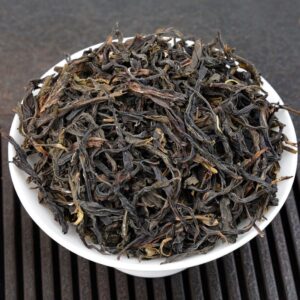
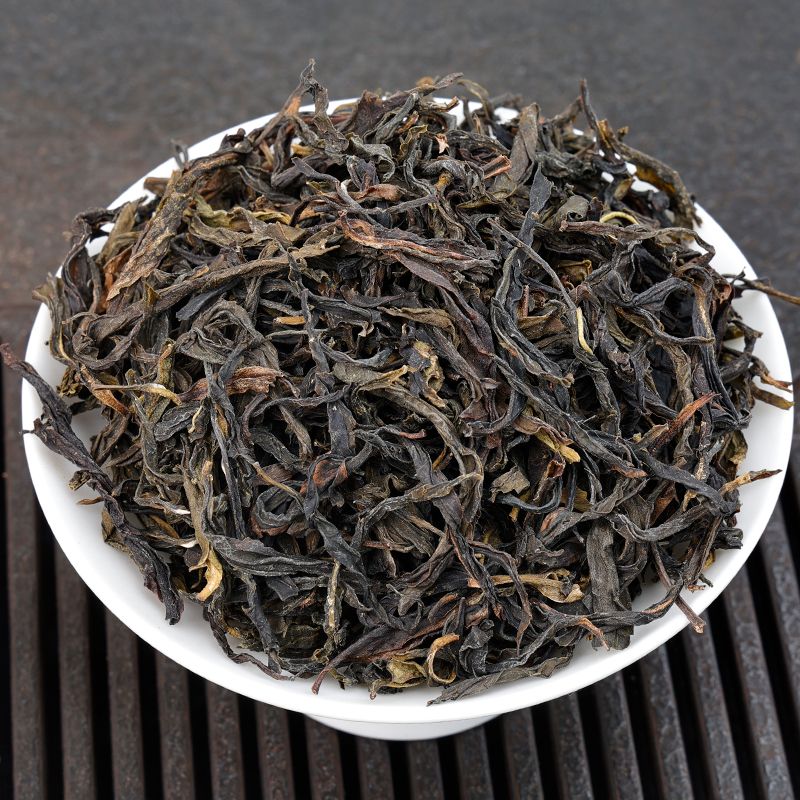
Among the dazzling array of Chinese Oolong teas, one particular variety is crowned by tea connoisseurs as the “Perfume of Teas” due to its soaring, multi-layered, natural floral and fruity aromas. This is Phoenix Dancong (Fenghuang Dancong) from Chaozhou, Guangdong. Celebrated for its astonishing characteristic of “one tree, one distinct aroma” and its profoundly impactful Shan Yun (mountain charm), Phoenix Dancong is not only the soul of Chaoshan Gongfu tea culture but has also ignited a global craze for single-cultivar oolongs in the modern tea world.
1. Origin: the origin of Phoenix Dancong is deeply rooted in the mists of history and the ingenious selection of nature.
Phoenix Dancong originates from Phoenix Town, located in the Chaoan District of Chaozhou City. Records suggest its cultivation history spans over 900 years, dating back to the late Song Dynasty. Legend has it that while fleeing south, the young Emperor Zhao Bing of the Song Dynasty passed through the Phoenix Mountains. Parched and exhausted, his attendants picked the leaves of a wild tea tree whose foliage resembled a bird’s beak and brewed them into a beverage. It instantly quenched the Emperor’s thirst and revived his spirit. Thus, this native wild strain earned the names Song Zhong (Song Dynasty Strain) or Niaozui Cha (Bird-Beak Tea).
Over centuries of cultivation, local tea farmers noticed a fascinating phenomenon: due to long-term natural mutation, individual trees within the native Phoenix Water Sprite (Shuixian) population exhibited massive variations in aroma and quality. To preserve the finest traits of these exceptional trees, farmers abandoned the traditional practice of bulk harvesting and blending. Instead, they adopted a highly meticulous methodology: “harvesting from a single tree, processing from a single tree, and marketing from a single tree.” This unique method of individual production is the origin of the name “Dancong” (literally meaning “single bush” or “single cultivar”).
2. Historical Evolution: From Imperial Tribute to the “Ten Major Aromas”
The history of Phoenix Dancong is an aromatic evolution of emerging from deep untamed mountains to stepping onto the global stage, transforming from a single wild strain into an explosion of botanical aromas.
(1).Emergence during the Ming and Qing Dynasties:
During the Chenghua era of the Ming Dynasty, Phoenix tea was already designated as an imperial tribute tea. By the Qing Dynasty, selection and processing techniques had matured significantly, and farmers began classifying and naming individual trees based on leaf shape and distinctive aromatic traits.
(2).International Renown in the Modern Era:
In 1915, Phoenix Dancong won a silver medal at the Panama-Pacific International Exposition. This unique mountain charm crossed the oceans, capturing the attention of international tea enthusiasts.
(3).Scientific Categorization and the “Ten Major Aromas” (1980s):
To demystify the bewildering complexity of Dancong aromas, tea scientists and local farmers systematically organized the cultivars in the 1980s. They officially established the famous “Ten Major Aroma Types of Phoenix Dancong” (such as Huangzhi Xiang / Gardenia, Zhilan Xiang / Orchid, Milan Xiang / Honey-Orchid, and the paradoxically named Ya Shi Xiang / Duck-Shit Aroma). This milestone solidified Phoenix Dancong’s status at the pinnacle of oolong tea aromatics, celebrated worldwide for its “natural bouquet of a hundred flowers.”
3. Ideal Terroir: Alpine Volcanic Red Soil on the Tropic of Cancer
The reason Phoenix Dancong can manifest hundreds of distinct natural floral and fruity notes—while retaining its signature Shan Yun (a pristine, lingering alpine mouthfeel)—is entirely credited to the exceptional terroir of the Phoenix Mountain range.
(1). Climate: High Altitude and Drastic Diurnal Temperature Variations
The core production area of Phoenix Dancong lies in the rugged terrain of the Phoenix Mountains, perched between altitudes of 800 and 1,500 meters. The peaks are perpetually blanketed in dense fog and moisture. The cool temperatures at high altitudes slow the growth rate of the tea leaves, while intense ultraviolet light combined with sharp temperature drops between day and night forces the leaves to synthesize and store massive reserves of polyphenols, amino acids, and volatile aromatic oils.
(2). Soil: Weathered Volcanic Red and Yellow Soils
The Phoenix Mountain range is an ancient, extinct volcanic fracture zone. The soil here is primarily a rich red and yellow loam weathered from mineral-packed volcanic rock and granite. Deep and fertile, it boasts high organic matter and is naturally rich in essential trace elements like iron, manganese, and zinc. This micro-acidic volcanic soil provides steady, “bony” nourishment to the root systems, serving as the material foundation for Phoenix Dancong’s iconic Yan Yun Shan Gu (rock charm and mountain bones).
4. Health Benefits: The Balanced Aesthetics of a Semi-Fermented Tea
As a semi-fermented oolong tea, Phoenix Dancong undergoes a masterful and physically demanding Zuo Qing (shaking and bruising) process during production. This steps beyond simply coaxing out hidden aromatics; it perfectly balances the active health compounds within the leaf, offering multi-dimensional wellness benefits:
(1).Cutting Greasiness and Boosting Metabolism:
In the Chaoshan region, there is a deep-seated tradition of drinking tea immediately following a meal. Research reveals that the rich concentration of tea polyphenols and tannic acids in Phoenix Dancong can effectively activate lipolytic enzymes within the human body. This accelerates fat metabolism and reduces the intestinal absorption of dietary lipids, making it an incredibly potent digestif after a heavy feast.
(2).Antioxidant Power and Longevity:
Because it is partially oxidized, Dancong retains high concentrations of native polyphenols, catechins, and Vitamin C. These compounds act as powerful natural antioxidants that scavenge free radicals, protecting cells from oxidative stress, shielding the skin from environmental radiation, and supporting healthy aging.
(3).Stress Relief and Mood Elevation:
While a moderate level of caffeine keeps the mind sharp and dispels fatigue, the true magic lies in Phoenix Dancong’s extraordinarily high concentration of natural aromatic hydrocarbons. When brewed, these compounds stimulate the olfactory system and trigger the brain to release dopamine. This acts as a natural mood elevator, alleviating anxiety, dissolving stress, and instilling a sense of tranquility.
If a robust black tea is a warm, steady gentleman, Phoenix Dancong is an enchanting, multifaceted mystic. It draws from the bones (volcanic soil) and soul (alpine mist) of the Phoenix Mountains, compressing centuries of history and an entire mountainside of blossoming orchards into a brilliant, crystal-clear golden liquor the moment boiling water hits the leaves. To sip a cup of true Dancong is not just to appreciate the meticulous, exquisite nature of Chaoshan Gongfu tea culture, but to experience a profound, sensory love letter from the natural world.
-300x300.jpg)